There's a quiet revolution happening behind kitchen walls in Manhasset, Old Westbury, and Brookville. The pantry — once an afterthought tucked behind a hollow-core door — is now one of the most thoughtfully designed rooms in the home. For families who invest in professional kitchens with Sub-Zero refrigeration and La Cornue ranges, it only follows that the storage supporting those spaces deserves equal attention.
What we're seeing across our North Shore clients isn't about following trends. It's about solving real problems: the family that entertains every weekend and needs catering-ready access to servingware, the household managing dietary needs across four different schedules, the couple who just completed a renovation and wants every square inch to earn its place.
The Butler's Pantry Revival
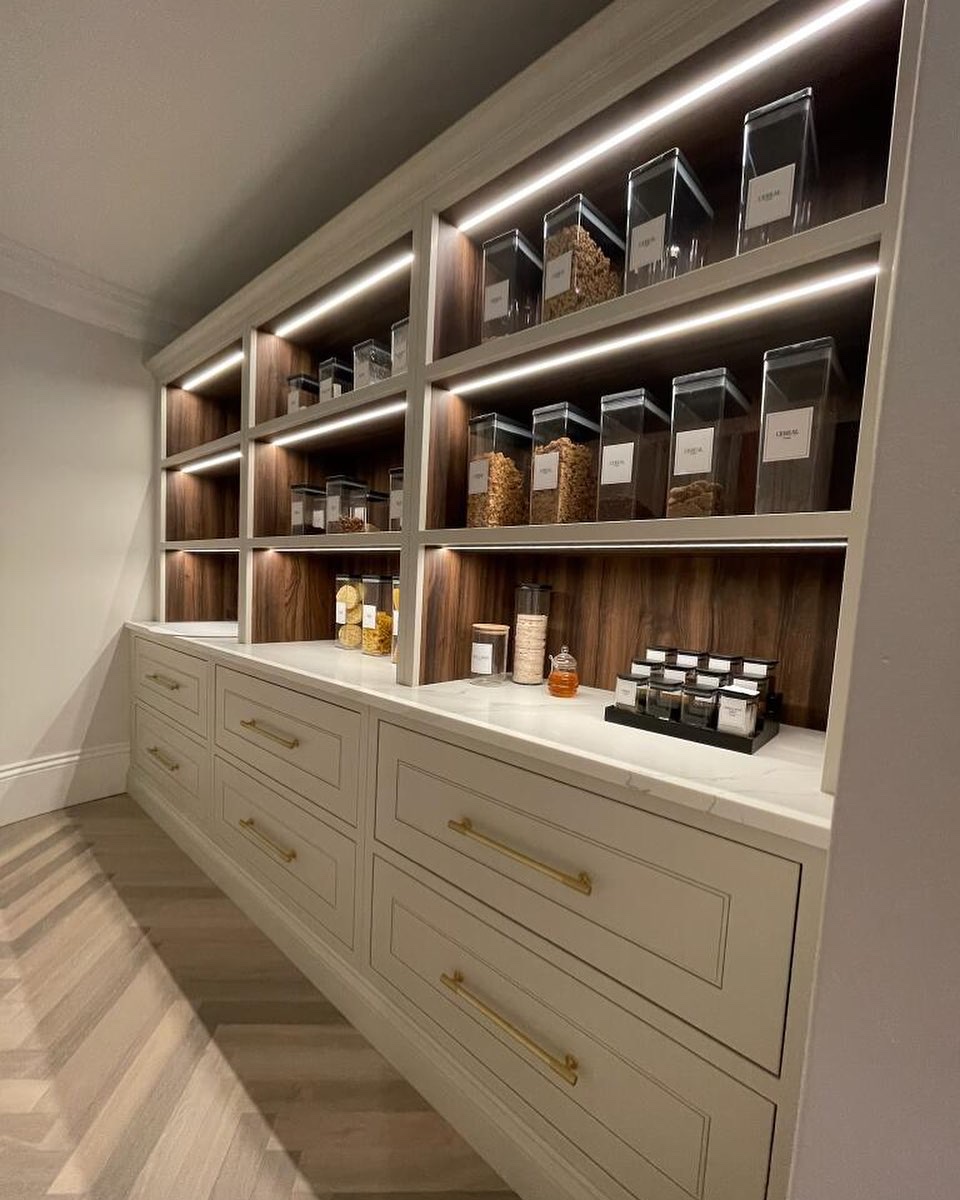
Many Gold Coast homes — particularly the colonials and Tudors built in the 1920s through 1950s — already have butler's pantries in their architectural DNA. These pass-through rooms between kitchen and dining room were designed for a different era of household staffing, but the bones are exceptional: deep countertops, generous cabinetry, and a natural workflow between preparation and presentation.
We've been helping families reclaim these spaces with a modern lens. Rather than treating them as overflow storage, a well-organized butler's pantry becomes a dedicated zone for entertaining prep, bar service, and fine china storage. The key is honoring the room's original proportions while introducing contemporary organizational systems that make everything instantly accessible.
Design Principles That Matter
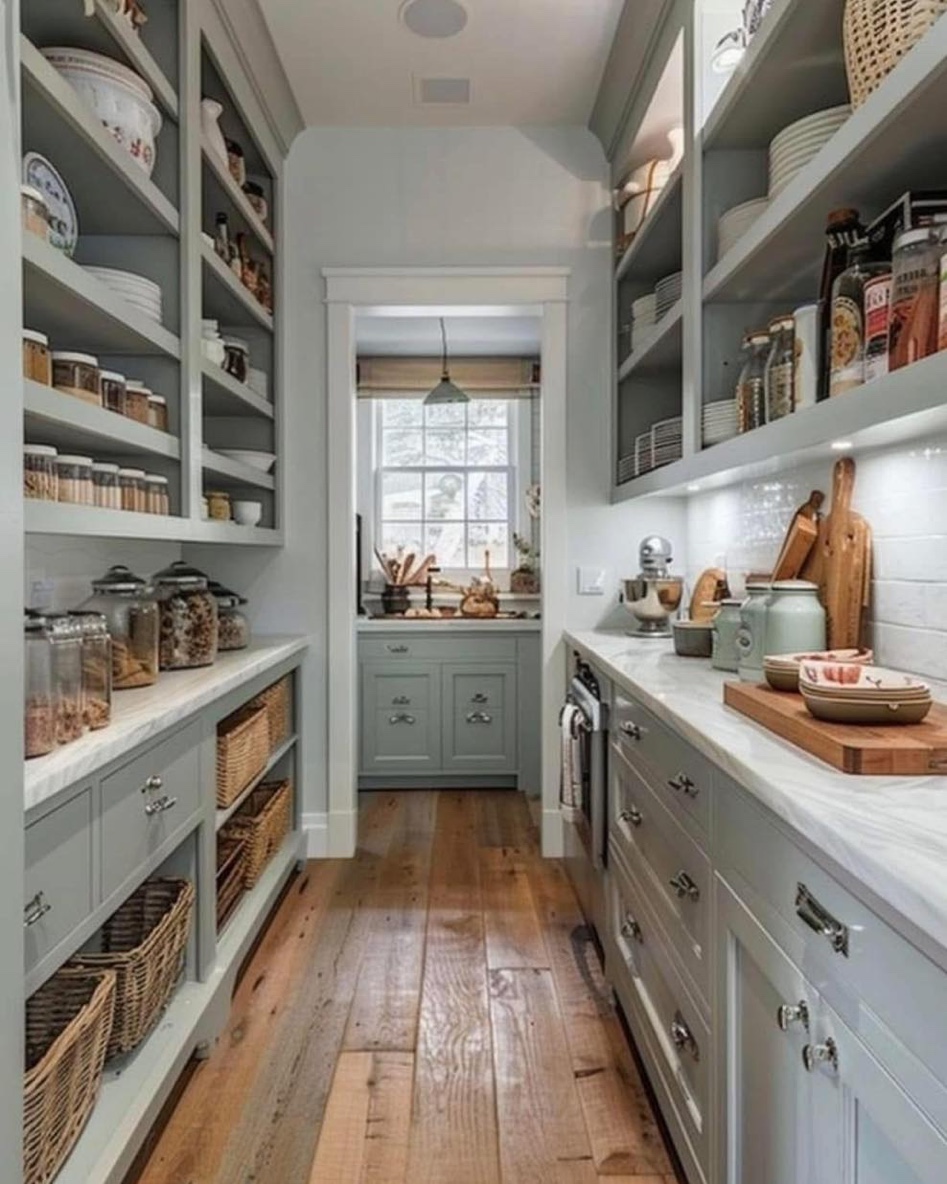
After organizing hundreds of pantries across Nassau County, certain principles consistently separate a pantry that looks beautiful for a photograph from one that actually works six months later.
Zones Over Aesthetics
The most common mistake in pantry organization — and the one we see even in high-end homes — is prioritizing visual symmetry over functional zoning. A pantry that works for a family needs distinct areas: everyday cooking staples within arm's reach, baking supplies grouped together, snacks accessible to children at their height, and entertaining supplies stored together regardless of category. We always begin with a thorough inventory and a conversation about daily routines before a single container is purchased.
The Container Question
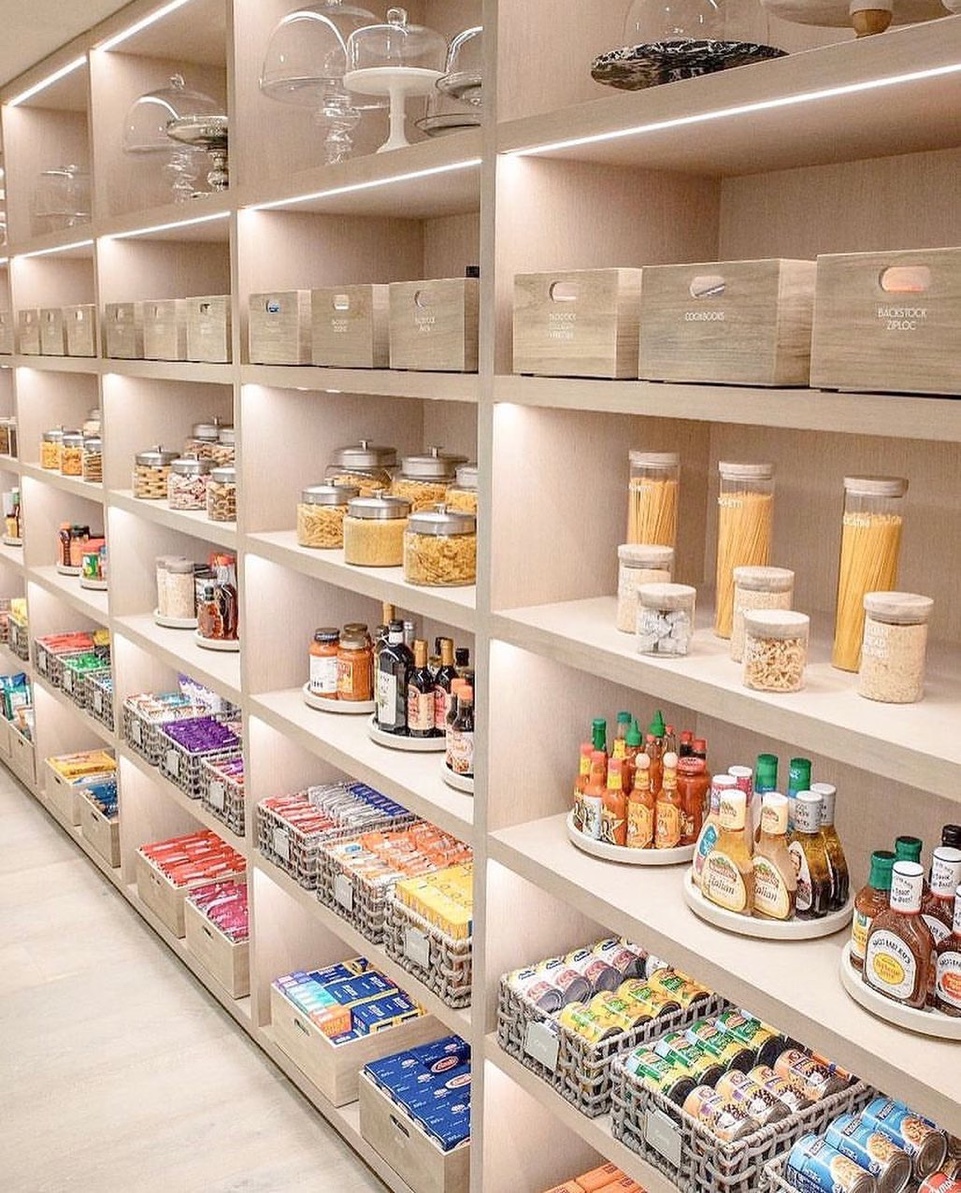
Uniform containers photograph beautifully, but the decision to decant should be practical, not purely aesthetic. Flour, sugar, rice, and pasta genuinely benefit from airtight containers — they extend shelf life, prevent pests, and make quantities visible at a glance. But there's no functional reason to transfer every item from its original packaging. The goal is a system your family will maintain without thinking about it, not one that requires a restocking ritual every grocery trip.
Lighting Changes Everything
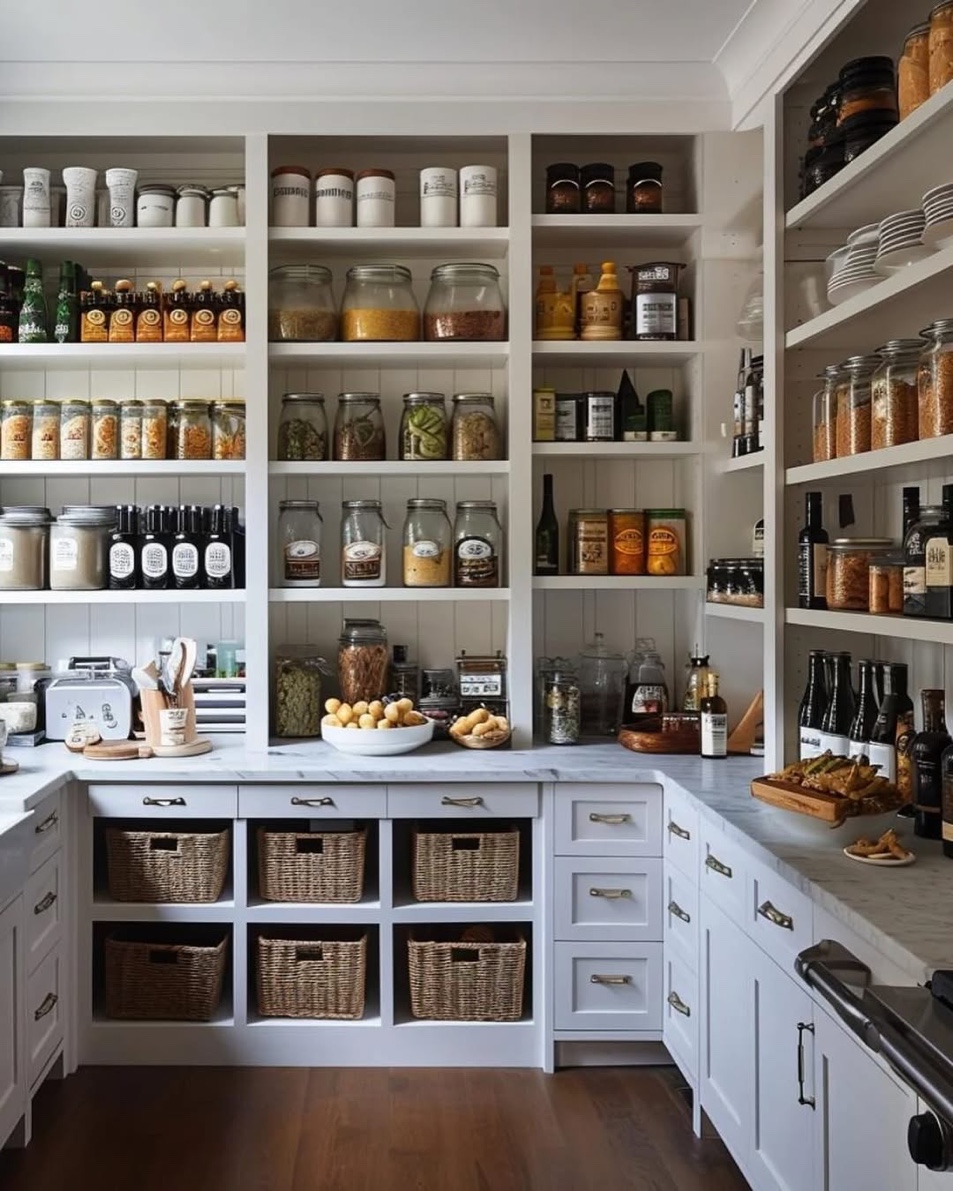
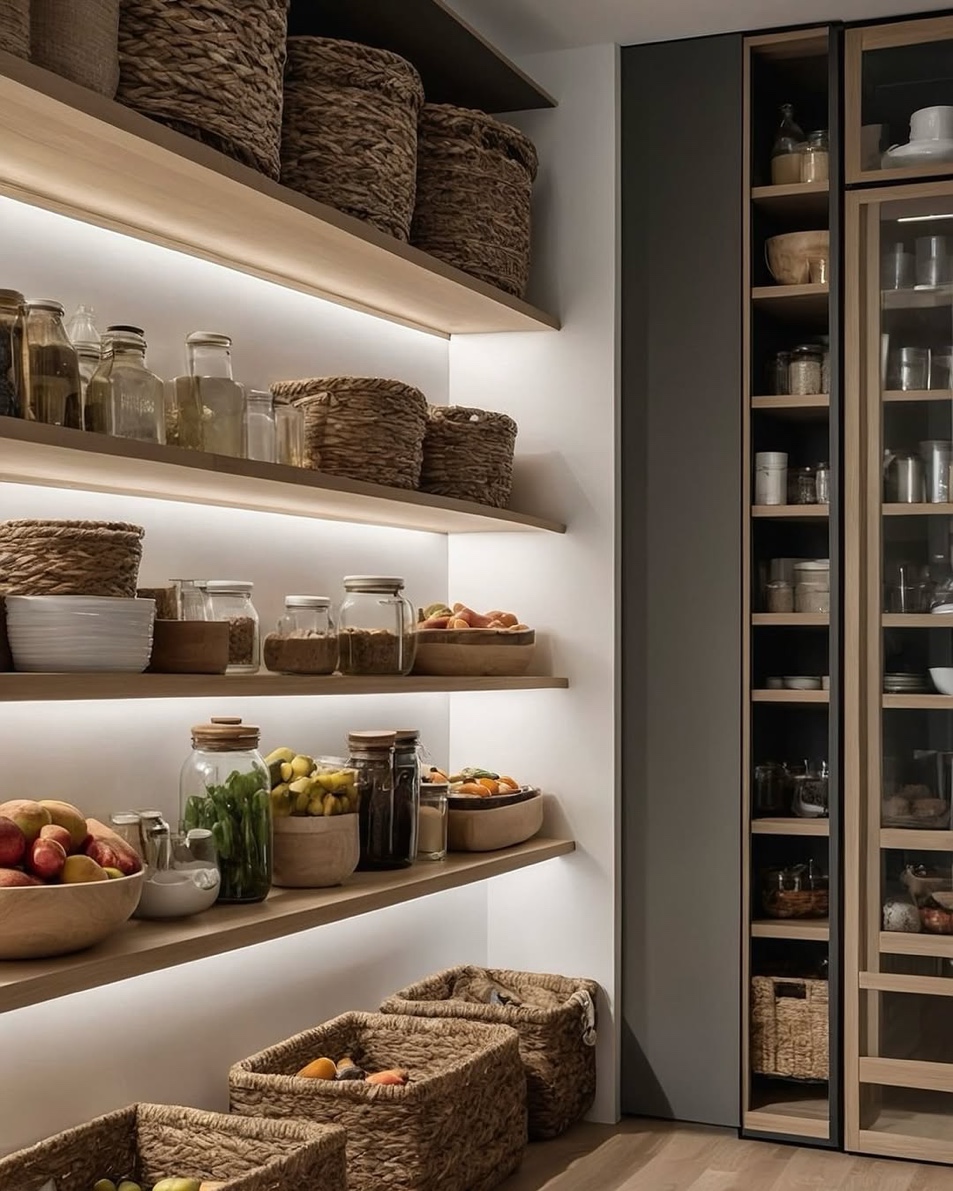
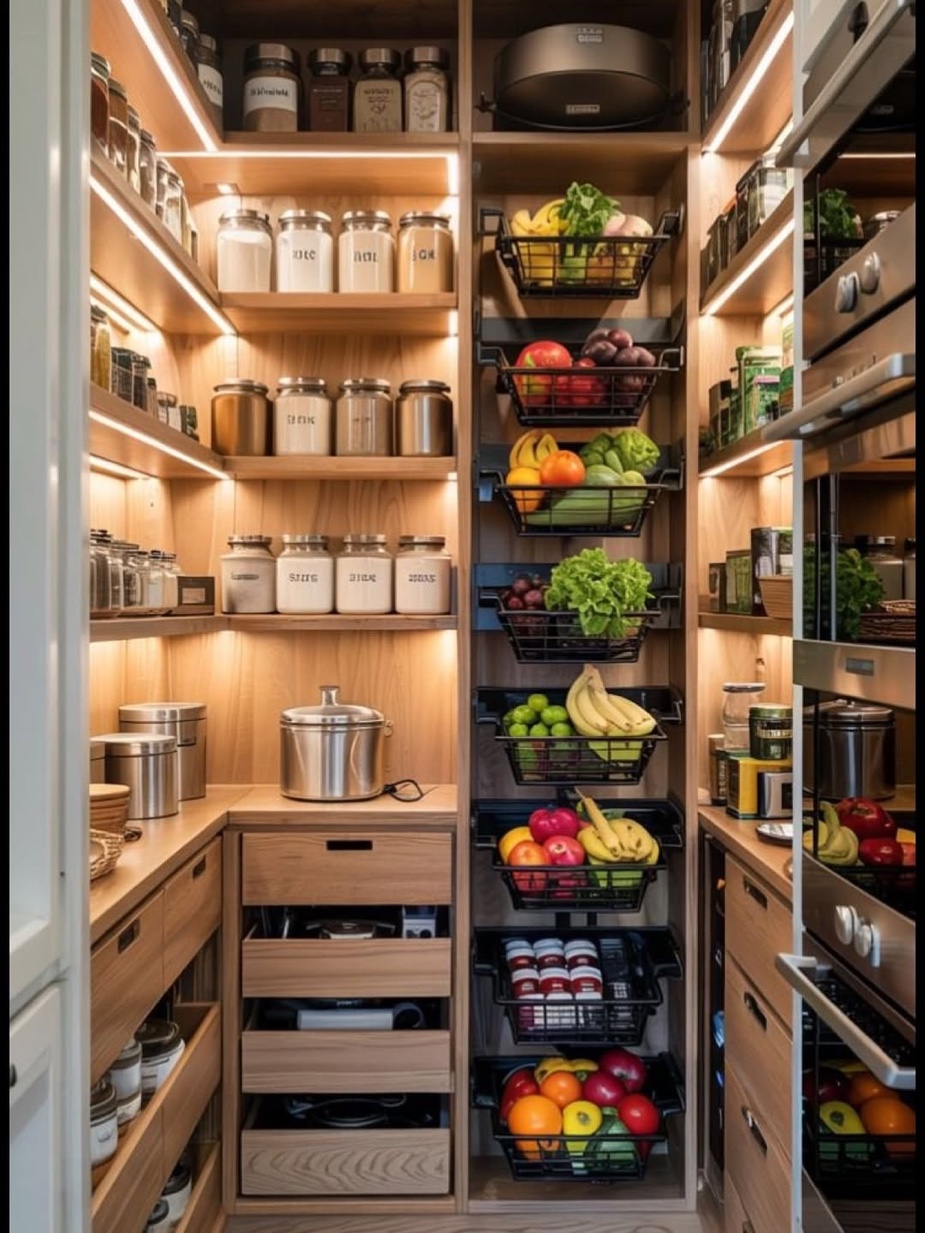
Walk into a pantry with integrated LED shelf lighting and the difference is immediate. It's not a luxury addition — it's a functional necessity. Under-shelf LED strips eliminate the shadowy back corners where items get lost and expire. They make labels readable without pulling things forward. And yes, they make the space feel deliberately designed rather than utilitarian. For walk-in pantries, we recommend warm-white LEDs (2700K–3000K) on a motion sensor so they activate when the door opens.
Hardware and Materials
In homes where the kitchen features Waterworks fixtures and unlacquered brass hardware, the pantry shouldn't feel like a downgrade. We work with clients to select materials that complement the kitchen: marble or quartz work surfaces for prep areas, brass or matte black pull-out hardware, and shelving materials that range from painted millwork to natural walnut depending on the home's aesthetic. The pantry doesn't need to match the kitchen exactly, but it should feel like it belongs to the same house.
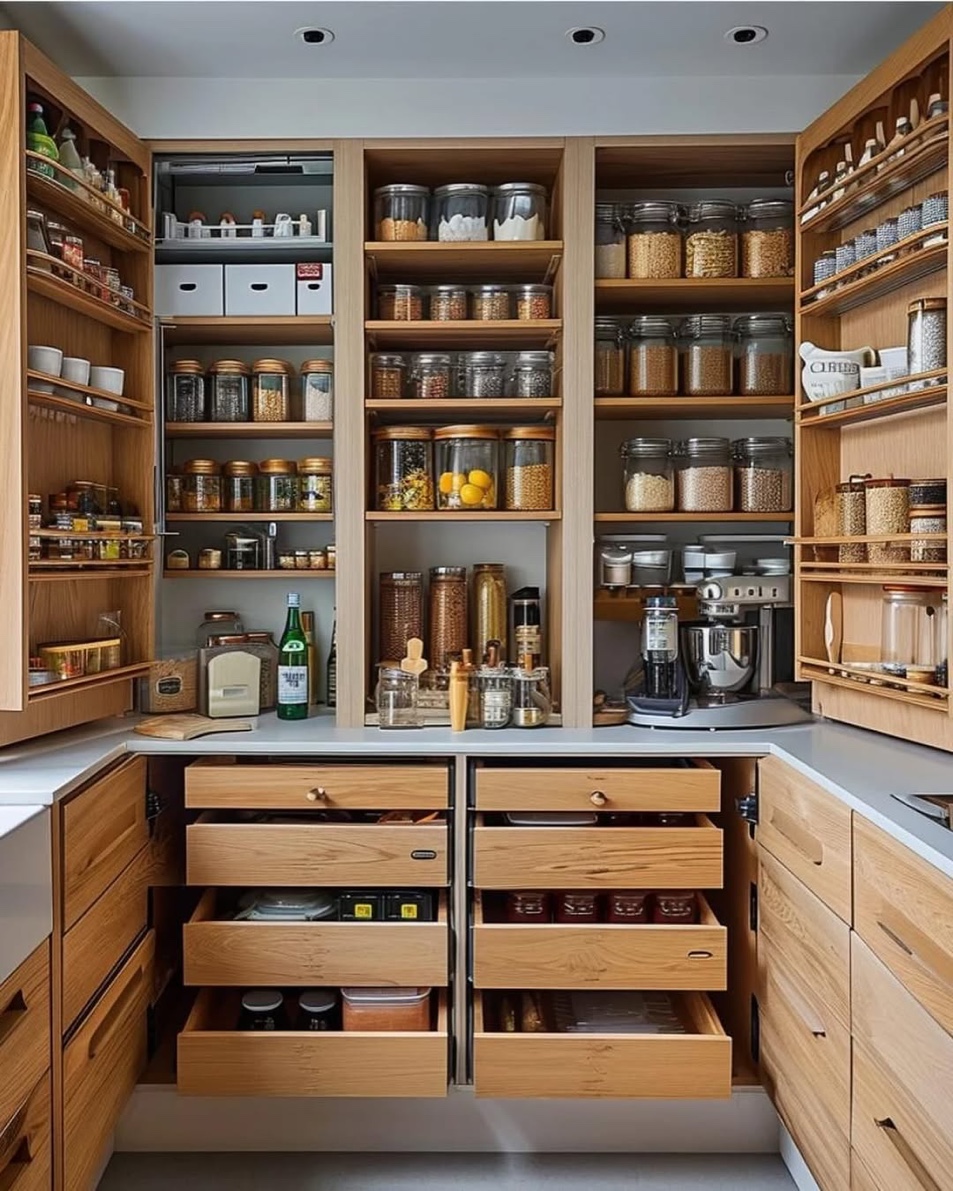
Walk-In vs. Reach-In: Making the Most of What You Have
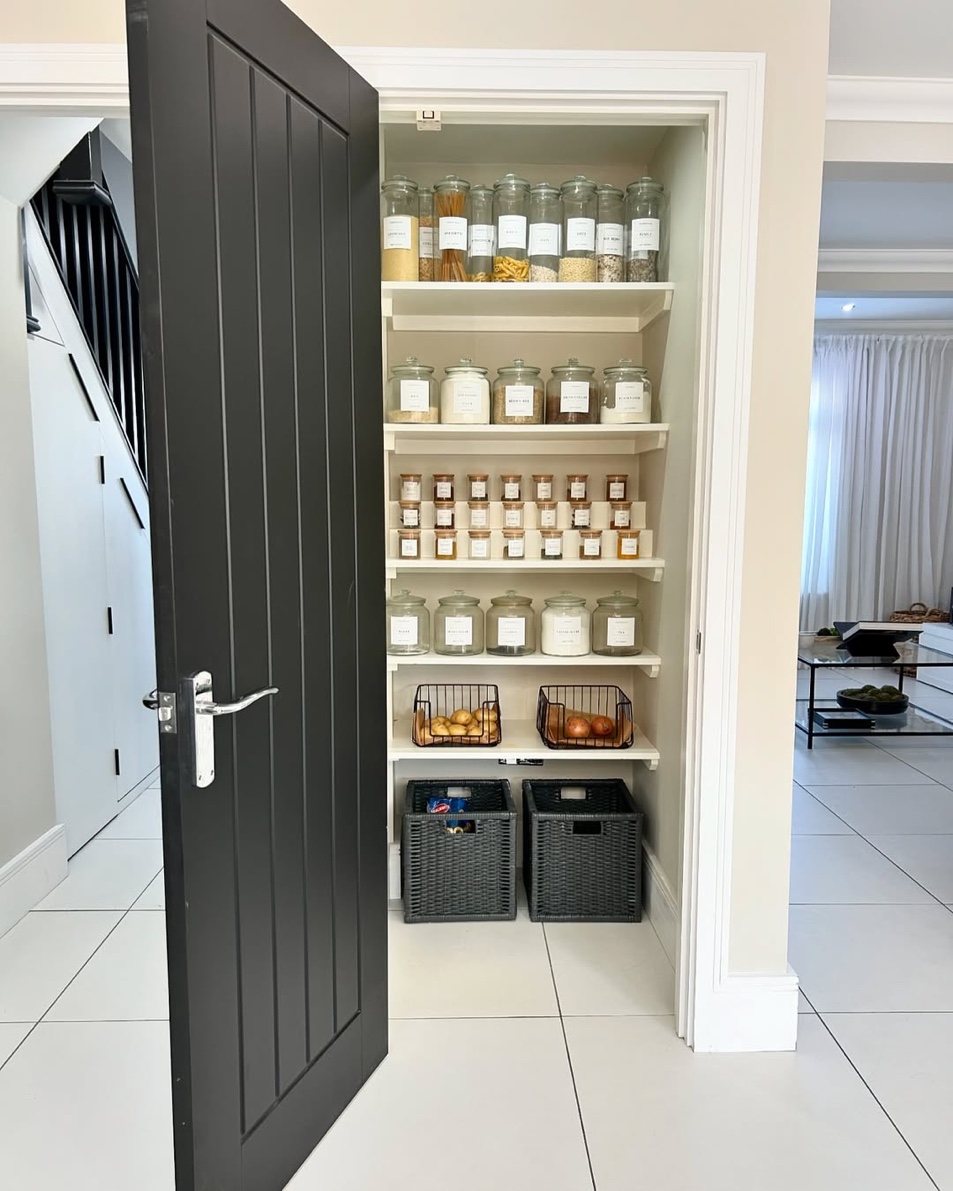
Not every Gold Coast home has space for a walk-in pantry, and that's perfectly fine. Some of our most satisfying projects have been small reach-in closets transformed with custom shelving, door-mounted racks, and a thoughtful layout that tripled the usable storage. The size of the space matters far less than the intelligence of the system.
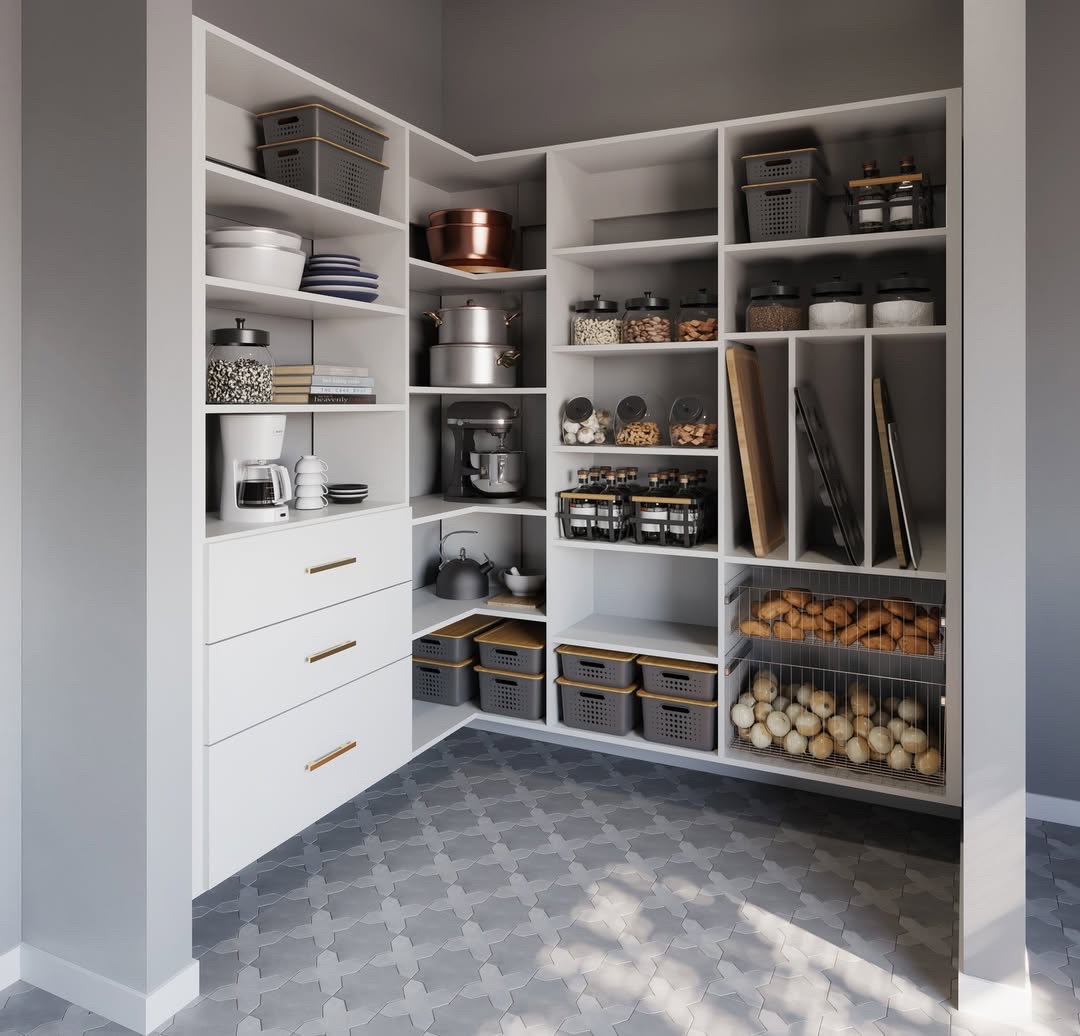
For walk-in pantries, the U-shaped configuration with a central work surface is our most requested layout. It provides counter space for unloading groceries, natural zones on each wall, and enough depth for both open shelving and closed storage. The countertop itself becomes a critical organizational surface — a place to stage meal prep, charge devices, or keep a running grocery list.
The Family Factor
Every pantry is ultimately a portrait of the family it serves. A household with young children needs snack drawers at low heights and nothing breakable within reach. A family that hosts Shabbat dinners needs dedicated space for specialized cookware and bulk entertaining supplies. A couple whose children have left for college may want to downsize the cereal shelf and expand the wine storage.
We've found that the most successful pantry organizations happen when every household member has input. Children who help choose where their snacks live are more likely to put things back. A system that respects how each person actually uses the kitchen — not how we think they should — will sustain itself long after the organizer leaves.
"We'd been in our Roslyn home for twelve years and never once felt in control of our pantry. The organization completely changed how our kitchen functions — my husband actually puts things back in the right place now, which I'd given up on."
Maintaining the System
Organization without maintenance is just a before photo waiting to happen. We build maintenance into every pantry project with three strategies. First, labeling: clear, consistent labels that remove guesswork about where things belong. Second, the "one in, one out" principle for categories that tend to accumulate (spices, sauces, specialty ingredients). Third, a quarterly check-in — either self-guided with a checklist we provide or as part of a seasonal maintenance visit — to address the natural drift that happens in any household.
The pantries that stay organized years later share one trait: they were designed around habits rather than aspirations. We don't build systems that require a family to change who they are. We build systems that make their existing routines more efficient and more pleasant.
Investment and Value
A professional pantry organization typically ranges from a single afternoon for a reach-in closet to a full day for a large walk-in with custom elements. The investment includes our organizational design, all containers and storage solutions, labeling, and a follow-up check after the family has lived with the system for a few weeks.
What clients consistently tell us is that the value extends well beyond the pantry itself. Grocery shopping becomes more efficient when you can see exactly what you have. Meal preparation is faster when ingredients are grouped by use. Food waste decreases — sometimes dramatically — when expiration dates are visible and nothing hides in back corners. And there's something genuinely satisfying about opening a pantry door and feeling that everything has a place.
Ready to Transform Your Pantry?
Whether you're working with a compact reach-in or a generous walk-in, our team designs pantry systems that work for your family's real life — not just for the photograph. Let's start with a conversation.
Schedule a ConsultationAbout Gold Coast OCD: We provide luxury home organization and cleaning services for discerning families throughout Nassau County's Gold Coast communities, with a specialization in kitchen, pantry, and closet transformations.
Related Services: Pantry Organization · Kitchen Organization · Custom Storage Solutions · Seasonal Maintenance Programs
Service Areas: Manhasset · Roslyn · Great Neck · Old Westbury · Brookville · Oyster Bay · All Gold Coast Communities